

Australian Prime Minister Press Conference – Canberra 12 January
Good afternoon. Firstly, can I say that following my visit to Victoria yesterday, to Bendigo, to Ravenswood and to Harcourt, we received the devastating news of a loss of life. Our thoughts go to the family, the friends and the community who are impacted by this. And our thoughts are also with all those who are still doing it incredibly tough, those people who have lost their homes – 47 in Harcourt alone. These are communities that are under real pressure. In addition to that, in Far North Queensland, of course, we see the impact of the floods. This is a really tough time across Australia with different impacts of these extreme weather events. And at this time, I say on behalf of the entire Australian population, thank you to the emergency service workers, to the police and fireys, to the Australian Defence Force, to the volunteers, to all those who are helping their neighbours at this time.
At the worst of times, we always see the best of the Australian character. I saw that yesterday. There, there’s a staging area at Ravenswood at a petrol station, where the local SES, fireys are coordinating the activity going out there, where the firefighting fleet, including the aircraft operating from that area, and what we saw is just people helping, helping out. Often, some of them from communities themselves that have been devastated in recent by floods or by fire. The last time I was at the Bendigo Centre there, it was to deal with floods in Victoria. A short time later, I’m back and it’s to deal with the opposite, of fires that have been devastating. So, we’ll continue monitor these situations. We’ll continue to be in close contact with Premier Allan, with Premier Crisafulli, who I spoke with again yesterday, and the Commonwealth will always provide whatever support we can. And the decision to have a National Emergency Management Agency has certainly made a difference for help flowing very quickly to those communities. But we know that there will be much more to do in the future.
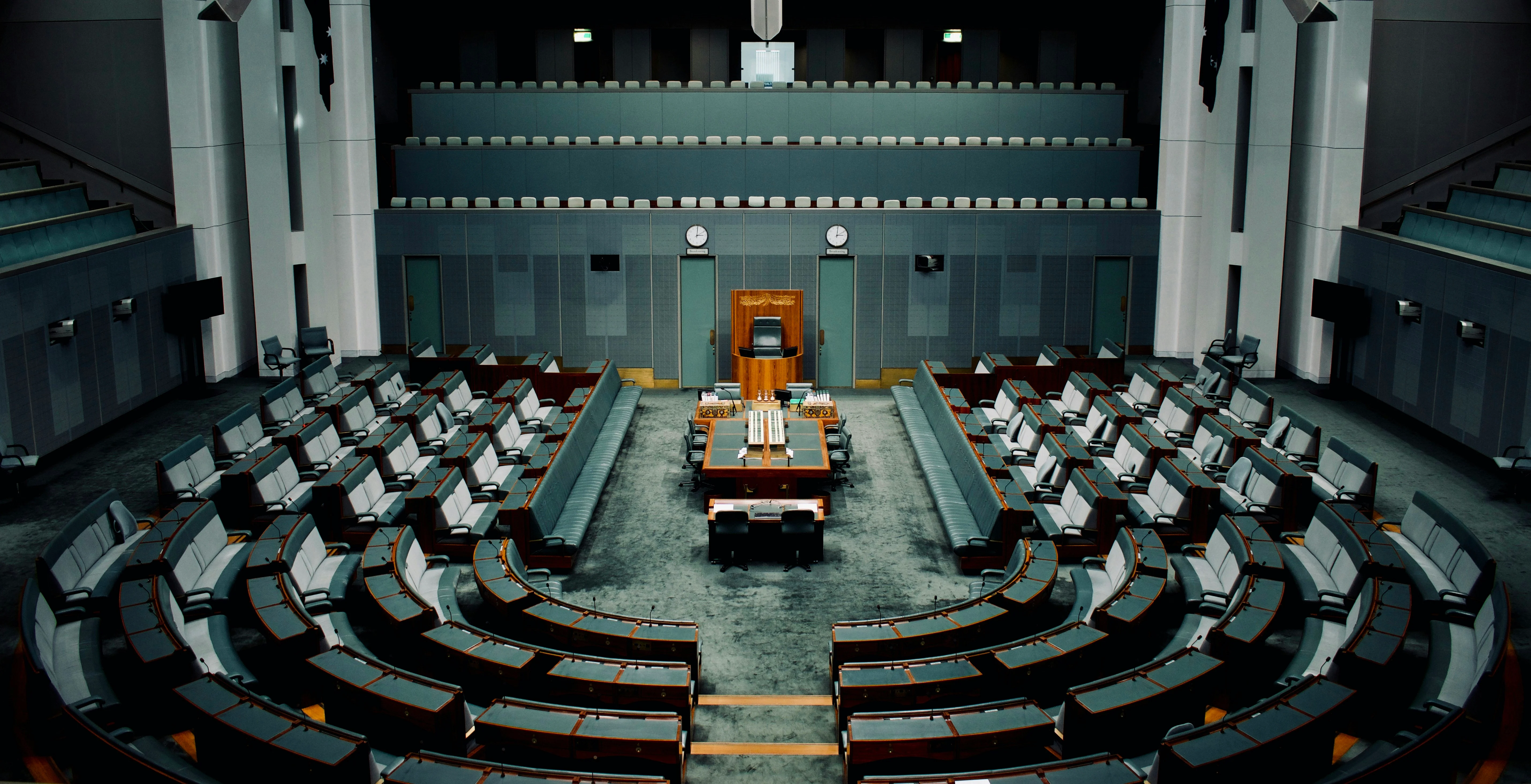
To today, can I say that I will write, this afternoon, to the Speaker of the House of Representatives for Parliament to be recalled next Monday and Tuesday, both the House of Representatives and the Senate. The plan is to have a condolence motion debated in both Houses on Monday. There has been agreement with the Opposition about the wording of that condolence motion. It will be an opportunity for the Parliament to come together and convey our sympathies to the loved ones of those murdered by these terrorists on Bondi Beach on 14 December, to recognise the trauma and the pain of the people who have been injured, to honour the courage and quick action of police, first responders, and healthcare workers, and the lives that they saved, as well as the everyday Australians who, in the face of this savage event, showed incredible bravery and didn’t think of themselves but thought of others. The motion will unequivocally condemn the terrorist atrocity perpetrated at Bondi Beach and commit our Parliament to eradicating the evil of antisemitism. And I’m hopeful that it can deliver a powerful statement by all members and senators voting for the condolence motion.
On the Monday, there will be three speakers from each side firstly in the House of Representatives, and then as well, Allegra Spender as the local member, will be invited to speak, and then there will be a suspension of that to enable the Attorney-General to introduce legislation which we’ll then lay on the table. We’ll then return to the condolence motion and that will continue throughout Monday and Tuesday. We will, later today, brief – I met with the Leader of the Opposition already today, but there will be a briefing for the Opposition on the legislation later this afternoon by the respective departments, and it will be referred to the Joint Parliamentary Committee on Intelligence for report. It will be publicly released tomorrow, and Greens members and crossbench members will be able to access a full briefing as well from tomorrow on Tuesday in the House of Representatives. The legislation will then be debated on Tuesday in the House of Representatives. We intend to have that legislation pass the House before Question Time, which will occur at the normal time at 2:00pm, and then will be considered by the Senate in the afternoon in order to ensure its passage on that day.
The bill is the Combatting Antisemitism, Hate and Extremism Bill. It’s a comprehensive package of reforms which create serious offences for hate preachers and leaders seeking to radicalise young Australians. It increases the penalties for hate crimes offences. It ensures offenders whose crimes are motivated by extremism have that factored into sentencing. It creates a new offence for inciting hatred in order to intimidate or harass. It expands and strengthens the ban on prohibited symbols, and it makes it easier for the Minister for Home Affairs to cancel or refuse a visa for people intent on spreading hatred. And it creates a new framework that will enable the Minister for Home Affairs to list organisations as prohibited hate groups. Once an organisation is listed, it will be a criminal offence to be a member, to recruit for it, to donate or receive funds, or support that group in any way.
The legislation will also set up the National Guns Buyback Scheme, bringing Australia’s world leading gun laws into the 21st century, and getting guns off our streets. As I’ve said before, there are more guns now in Australia than there were at the time of the Port Arthur massacre. That is not good enough. The terrorists at Bondi Beach had hatred in their minds but guns in their hands. This law will deal with both. And we do need to deal with both of these issues. These complex laws and our focus is ensuring they’re effective and practical.
We will continue to navigate, no doubt, there will be legal processes, because this is an area of constitutional question. This is new laws going further than they ever have before. But we want to support the efforts of our police and our security agencies. We want to ensure that Australia remains a society where everyone has the right to be proud of who they are. And we also want to make it clear that conduct which is hateful, dangerous, and divisive will also be illegal. Because just as antisemitism and racism are an offence against our Australian values, they should be an offence against Australian law. This afternoon, we’ve referred that legislation to the committee.
So, the processes from here is that we will engage constructively. It will be an opportunity for people to make submissions through appropriate processes. We want this to be timely but we also want there to be a proper process, which is why we are going to have this process over the next week. National unity is vital to our national security, and our government will strengthen both. I’d ask the Attorney-General and then the Minister for Home Affairs.
MICHELLE ROWLAND, ATTORNEY-GENERAL: Thank you, Prime Minister. And can I start by echoing the Prime Minister’s comments about our fellow Australians who are doing it so tough during these challenging times with those fires.
As the Prime Minister said, today the Albanese Government has taken another important step towards a safer, more unified Australia, with Cabinet agreeing to the Government’s stronger, more robust hate legislation. The Government announced our intention to introduce these laws in the days following the abhorrent Bondi terror attack, and I’m very pleased that, in a relatively short period of time, have been able to draft, consult, and develop this vital package of legislation. Let me be clear – once these laws are passed, they will be the toughest hate laws Australia has ever seen. They will specifically target those who seek to spread hatred and disrupt social cohesion in our community. And it will send a clear message that this conduct will not be tolerated. In particular, as the Prime Minister outlined, the bill introduces an aggravated hate speech offence for preachers and leaders who promote or threaten violence against protected groups or members of groups. There will be increases in penalties for hate speech offences relating to advocating or threatening force or violence against protected groups or members of groups and their property. It will make racial hatred an aggravating factor in sentencing in a number of Commonwealth crimes. It will create a regime for listing organisations whose leaders engage in hate speech or promote violence or racial hatred. And it also introduces a new racial vilification offence that criminalises inciting hatred based on the grounds of race. Now, these laws build on the hate speech legislation the Government introduced last year and the hate symbols legislation that came before that. This Government has moved urgency and care to draft these laws, consulting with experts and stakeholders, including the Jewish community. The draft legislation, as the Prime Minister said, will now be referred to the Parliamentary Joint Committee on Intelligence and Security, and the public will be able to make submissions. As I have said, this is not a time for partisanship. Broad support right across the Parliament is essential to making these laws a reality and keeping Australians
TONY BURKE, MINISTER FOR HOME AFFAIRS: Thanks, Prime Minister, and join for my responsibility with NEMA as well in the huge concerns with everybody battling those fires.
Following the atrocity of the evil antisemitic terrorist attack in Bondi, we needed to deal with the motivation and the method. This legislation will deal with both. The motivation was fuelled with hate, that form of racism known as antisemitism. There have been organisations which have played a game for a long time in keeping themselves just below the legal threshold. They were called out last year by Mike Burgess, the Director-General of ASIO, for the real harm they do to our national security. The two groups he called out specifically were the Nazis, the National Socialist Network, and Hizb ut-Tahrir. Two groups which through their spreading of hate, have a direct impact on increased risk on our national security environment, but have kept themselves just below the law. For while they have created a pathway for others to engage in violence, have been careful to not explicitly call for it themselves. They’ve kept themselves just below that threshold. This bill will lower that threshold, and lower that threshold to the extent that we can within the Constitution. We have had enough of organisations that hate Australia, playing games with Australian law.
We will also increase powers that I would have, as Immigration Minister, in terms of the cancelling of visas. In terms of racist bigotry at the moment, I also have to test time whether someone is coming on a public speaking tour or the extent to which someone might cause social discord. This draws a line in the sand and says racial bigotry of itself is a reason to be able to refuse a visa. Finally, with respect to guns, the legislation will allow us to use the AusCheck system. It will effectively create a pathway where states and territories can have a two hurdle process before someone is issued with a gun licence. The final hurdle remains the fit and proper person test the states already have, but to put in place in advance of that, an AusCheck system, which will allow the intelligence that is held by ASIO and the Australian Criminal Intelligence Commission to be able to be used to create the extra layer of caution if someone themselves is a risk if they’re applying, or if the risk resides in the member of their family or a member of their household. With all of this, we deal with the motivation and the method. We deal with the why and the how.
JOURNALIST: Prime Minister, the Attorney said that broad support from across the Parliament would be necessary. How open to serious suggestions from the Coalition or the Greens will you be to changes on hate speech laws?
PRIME MINISTER: We’re open to constructive suggestions. This is draft legislation. We spent a lot of time getting it right. There has been a lot of consultation already, not just with the Jewish community, but with other communities as well. We want to get it right. But if someone has a constructive suggestion, then it will be considered on its merits.
JOURNALIST: You want to deal with method and motivation, but there’s been more political debate around the gun reform than the other section on hate speech. Why not split both sections up. Is that an attempt to wedge the Coalition?
PRIME MINISTER: This is not about politics. This is about getting right. Those people who conducted this antisemitic terrorist attack at Bondi on 14 December had both the motivation from being inspired by ISIS, but they had the means. There was a very moving speech by Peter Meagher’s brother at St Mary’s Cathedral just last week, where he spoke very much about someone who is an antisemite is someone, you know, who can profess hate, an antisemite with a gun is something very different as well. So, we need to deal with both.
JOURNALIST: Prime Minister, there’s been some controversy around the cancellation of a Palestinian Australian author appearing at the Adelaide Writers’ Festival. Do you have a view on whether she should be reinstated, given your concerns about social cohesion at this time or otherwise?
MINISTER BURKE: With respect to any writer’s festival, we leave those decisions to the festivals themselves. We don’t tell festivals who they should put on and who they shouldn’t.
JOURNALIST: Mike Burgess said repeatedly that antisemitism and online radicalisation are some of the biggest threats to Australia’s social cohesion and security. How have you consulted with intelligence agencies on what should be in this laws, particularly around online radicalisation?
PRIME MINISTER: They’ve all been involved in the involvement of these laws, our National Security Committee met again this morning.
JOURNALIST: Prime Minister, can I ask – what’s your judgement on social cohesion in Australia today? How are we holding together as a society?
PRIME MINISTER: That social cohesion is under pressure globally. There are a range of reasons why that’s the case. The device being held in people’s hands here, is one of them as well. We see an increase of polarisation of views around the world. We see not just social media but indeed mainstream media sites, if you look at the headlines that are on stories, erring on the side of shouting rather than talking. Yelling rather than explaining. And that’s a pressure which is real on our society. It is something that we need to have a broad discussion about, this is just one element of it. So, I want an Australia that goes to our values, where everyone is respected. Where the Australian covenant is that when people come here, they leave any hatreds and prejudices in the customs hall and recognise the strength that is here in our diversity. One where we’re able to discuss differences in a mature and respectful way, rather than accusatory, rather than looking to always blame someone else. One the things we see and is that on the Middle East, people have different views. They’re entitled to express those views. What they’re not entitled to do is to hold someone to account for the actions of others because they are a young boy wearing a school uniform, going to a Jewish school, or a young woman wearing a hijab. That’s not acceptable. And it is something that I certainly hope that the Royal Commission, on social cohesion, that’s one of the issues that we need to address, not just a government, we, as a society need to have that debate and we need to be able to move forward.
JOURNALIST: On the new classification for hate groups, can I just get a sense of what the penalties will be for those offences? And do you think they’ll be similar to what is currently under offences for associating with a terrorist group? Just on the potential legal challenges that that legislation may incur, given Hizb ut-Tahrir have already said they’re seeking legal counsel, do you expect there will be a High Court challenge?
ATTORNEY-GENERAL: I will start with your last question first – I mean, HUT is a global organisation and they have a long history of engaging legal counsel to ensure they do not fall foul of laws in particular countries. So, we have crafted this legislation in a way that’s robust and we understand, of course, that these are laws that may be challenged. That’s the reality. But the Government stands by our drafting. We stand by ensuring that we are as tough as possible, acknowledging as was said previously there are constitutional limits. But again, if a challenge is brought, we’ll vigorously defend those. In addition to what I have just said, about the offences for prohibited hate groups as well, they will be new offences, criminalising certain dealings, interactions and engagements with organisations that would be a prohibited hate group. There would be a number of defences that could apply here, but indeed, we’re looking, if you’re talking about the racial vilification offence, we would have a new offence that’s punishable by a maximum penalty of five years imprisonment. There’s serious penalties proposed here. One of the reasons why we’re putting this out for consultation is to garner those views.
JOURNALIST: In terms of the process, the speed at which you’re getting this legislation through Parliament, it’s going to a committee that does not have teals or other independents on it. And then to the Senate. Do you have a deal with the Coalition to get this through the Senate next Tuesday by the looks of things? What do you say to people who would say that’s a real rush, given the complexity of the legislation that we’re talking about, and the trade-offs that are involved?
PRIME MINISTER: This isn’t a time – I’ve been in this building for a while, as have you. There have been times when legislation has been introduced and carried through both Houses in a day. People are going to have a week before Parliament sits to examine this legislation. We’ll provide a full briefing to the Opposition this afternoon, they’ll have the legislation before the briefing, as was requested. I have been meeting with Sussan Ley every week, formally. And going through and keeping the Opposition informed on this. I have a call scheduled with Larissa Waters this afternoon. We will make the officials available to all of the crossbenchers as well as to the Greens, from tomorrow. And in terms of timing, I think that there is an urgency, but matched with getting it right, which is why we’ve spent considerable time. We had to sit down and consult as was appropriate, with groups at the end of last week, as I indicated. I don’t speak on behalf of the Opposition. And – but we have engaged with them, I’ve gone through very clearly and transparently what the timeframe is. And so, I would expect that there will be cooperation. I note Steven Lowy’s comments on the front page of the paper today. I think this is what people want to see. And when I met with Mr Lowy, I met with some time ago, it was certainly constructive. I have spoken with the President of ECAJ this morning, as well. And so, people are being kept informed. People have an opportunity to contribute.
JOURNALIST: Is it still your intention for the cost of the Gun Buyback Scheme to be split 50-50 between the Commonwealth and states? Are you confident you have the support of the states and territories on that part of the legislation?
PRIME MINISTER: It’s up to the states to speak for themselves. But I think that states that don’t participate will have to justify that to their own people.
JOURNALIST: There seems to be some concerns from some eminent Australians, some legal scholars, around some untidiness around the Royal Commission arrangements as they pertain to Dennis Richardson. Can you confirm what Mr Richardson’s status, the status of his review within your Royal Commission is? And do you believe that he will be able to get to the bottom of potential intelligence failures without coercive powers, protection for whistleblowers, that type of thing, that a Royal Commission can deliver?
PRIME MINISTER: I have absolute faith in Mr Richardson and the work that he’ll do. His report will form part of the work of the Royal Commission.
JOURNALIST: You don’t speak for the Opposition, but has Sussan Ley given any indication if she might –
PRIME MINISTER: I do not verbal anyone, least of all the Leader of the Opposition. It’s up to her to speak on behalf of the Opposition. I speak on behalf of the Government.
JOURNALIST: One question for the Home Affairs Minister and then yourself. You kind of have highlighted Hizb ut-Tahrir and the Nazi group, is it your expectation directly that you will immediately move to make those hate groups illegal? Is there anything else you’re looking at? For the PM, this legislative package would be very effective in a sort of broadcast Australia contained context, but we talked with Hizb ut-Tahrir being a global organisation, how are you going to deal with the fact a lot of this radicalisation, a lot of this content is coming from outside of your jurisdictional reach?
MINISTER BURKE: First of all, I have phrased it the way I have very deliberately in terms of the cases that will come subsequently is apprehended bias. I’m not going to use this question to walk into that. If I put it in the exact order which I did for a very deliberate reason, the ASIO, the Director-General of ASIO has called out those two organisations. And explained they kept themselves just below the threshold. We are lowering that threshold.
PRIME MINISTER: And on the global issues, look, evidence will come out from the Richardson Review and during those processes about the connections that the Akrams had or didn’t have, how some of the radicalisation occurred. We know that a lot of radicalisation can occur on the dark web. This is one of the challenges that will be looked at. It is not easy, it is hard as Mr Richardson has indicated previously, but then Mr Burgess as the Director-General has indicated very clearly it is difficult when it comes to a lone wolf, now, in this case, you have a father and son, that has a particular dynamic. And I don’t want to pre-empt some of the evidence that will come forward, and that will all be examined. But it presents a challenge and we understand that challenge is very real. Which is why it’s been identified by the security and intelligence agencies.
JOURNALIST: President Trump is openly considering further military action in Iran. Are you concerned that action there may further threaten social cohesion in Australia, and would Australia play any support or assisting role should that occur?
PRIME MINISTER: We’re not considering that. I will make this comment about Iran – that we stand with the people of Iran, who are standing up for their human rights, standing up for their dignity, standing up for a change that is required. This is a regime that has oppressed its own people. This is a regime that is cracking down on people protesting, and we don’t know what the real death toll is from people who have been either killed or injured for expressing their basic human rights. What we do know is this is an oppressive regime that has played a bad role, not only for its people but a bad role internationally which is why I stood in this very courtyard and expelled the Iranian Ambassador for the involvement of their agencies in attacks here on Australian soil. So, we stand with very much the people of Iran at this time.
JOURNALIST: You speak about urgency, and considering the fact you are bringing Parliament back two weeks earlier, do you anticipate people will be arrested or visas revoked under these new laws immediately?
PRIME MINISTER: We haven’t passed the laws yet. I’m hoping that the laws can be passed efficiently and quickly with the support of the entire Parliament. And I hope that the Parliament passes the laws. You’ll all get to see it, the draft legislation tomorrow. And I will speak to you tomorrow. Thanks very much.
https://www.pm.gov.au/media/press-conference-canberra-12-january-2026