Colombia Urged to Safeguard Ex-Combatants, Boost Reform
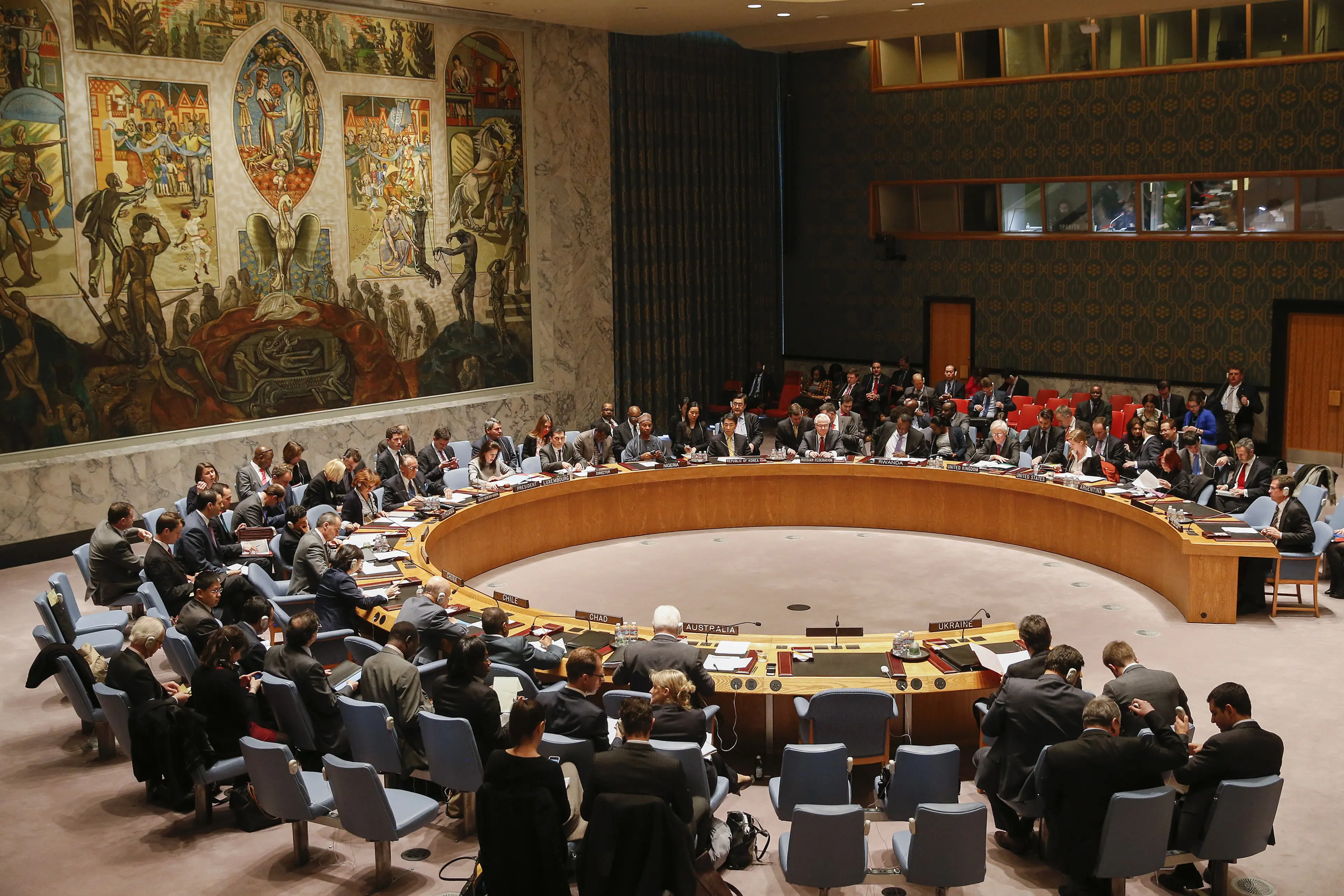
As the 2016 peace agreement in Colombia reaches the tenth year of its 15-year timeline, the Head of the UN Mission in that country called on its Government to continue to protect former combatants who have laid down arms, accelerate rural land reform and prepare for milestone elections in 2026.
"I was struck not only by the immense challenges facing communities in conflict-affected regions but also by their resilience and determination to achieve a better future," Miroslav Jenča, Special Representative of the Secretary-General and Head of the United Nations Verification Mission in Colombia, told the Security Council. He was recalling visits to various departments in Colombia, from Caquetá to Norte de Santander, and meetings with "Governors and Mayors, peace signatories, women's leaders and representatives of Afro-Colombian and Indigenous communities, church officials, private sector leaders and State officials".
In Colombia's most remote areas, he said, day-to-day life is a hard struggle due to illegal armed actors, the limited presence of the State and lack of development opportunities. He also noted challenges facing the 11,000 former combatants in the Government's reintegration programme. From the fish farming cooperative in Nariño to a coffee plantation in Cauca, it is crucial to secure the economic sustainability of their productive projects. Since laying down their arms, 487 former combatants have been killed, while the limited State presence in conflict-affected areas provides fertile ground for armed groups.
"Border areas are particularly complex", he said, noting that his Mission's team based in the city of Cúcuta on the border with Venezuela, is part of the response to continuing clashes. Mr. Jenča also noted adjustments to his Mission's mandate, as it goes forward in 2026 year with 200 fewer personnel and a 17 per cent resource reduction after the latest mandate renewal. It has discontinued previous verification tasks on transitional justice, the ethnic chapter and ceasefire monitoring.
The Final Agreement for Ending the Conflict and Building a Stable and Lasting Peace offers a much-needed holistic vision, and its rural reform section affords a historic opportunity to address one of the root causes of conflict in Colombia. The current Administration must expedite the implementation of the Agreement as much as possible during the remaining months of its term. As the country approaches elections, ensuring the security of candidates and voters in conflict-affected regions is crucial. "At a time of tensions both globally and regionally, it is in everyone's interest to secure lasting peace and security in Colombia," he said.
Colombia Reaffirms Commitment to Peace Agreement
The Council also heard from Mauricio Jaramillo Jassir, Colombia's Vice Minister of Multilateral Affairs, marking the first time the delegation participated in a quarterly Colombia meeting as a Council member. Reaffirming that "peace in Colombia can only be consolidated through the full implementation of the 2016 peace agreement", he said that, regardless of the Mission's reduced focus, his Government is implementing the accord in its entirety.
"The recent modification of the Mission's mandate did not fully satisfy the majority of members of this Council," he said, thanking those States that defended a broad mandate while stressing his Government's full respect for the decision adopted. He welcomed efforts to explore mechanisms that will allow such elements as the "ethnic chapter" and the Special Jurisdiction for Peace to continue to receive UN support.
He outlined progress achieved during the reporting period, including the creation of several critical Government bodies and agreement on an instrument to monitor the Strategic Security and Protection Plan. Reintegration remains a central pillar, with nearly 11,000 signatories active in the comprehensive reintegration pathway, he said, while noting challenges related to the economic sustainability of projects and rural land reform. "One of the most painful and urgent challenges in the implementation of the Agreement is the security of the peace signatories," he said, noting that 45 former combatants were killed in 2025 alone.
His country is confronting that reality with self-criticism and responsibility. "Colombia does not present before this Council a perfect process, but rather a real process, with progress, challenges and lessons learned."
"Peace Deals Require Credible Threats of Military Force"
However, the representative of the United States said Colombia's experiments with pausing combat operations and curbing coca eradication while pursuing talks with multiple armed groups have emboldened those groups. It risks creating perverse incentives, as it may encourage violence to improve negotiating leverage. Despite her President's "productive conversations" with the Colombian President, Washington, D.C., remains "deeply concerned about instability, violence and illicit drug cultivation and trafficking", she added.
She urged Colombia to prioritize addressing this threat, noting that per international observers, the number of armed combatants and their accomplices has grown by more than 40 per cent over the past three years. Unchecked violence and drug trafficking would jeopardize the safety of Colombians, people throughout the region and certainly Americans, she said.
The United States was heartened by President Gustavo Petro's warning to the National Liberation Army (ELN) of military action should they fail to demonstrate seriousness in pursuing peace, she acknowledged. "History shows that peace deals require credible threats of military force," she said, urging Colombia to prioritize confronting the violence and terror carried out by these groups and to guarantee security and justice for their victims.
Colombia's Peace Process Sets Example as Country Joins Security Council
Other speakers highlighted the remarkable progress achieved in Colombia and encouraged its Government to stay on track. Praising its efforts to implement the accord - especially on rural reform and land distribution - Denmark's delegate called on it to ensure the sustainable transition of these former fighters into civilian life. She commended "the resolve and determination of former combatants who remain committed to the peace agreement" and said: "Tackling the persistent violence across the country must be a priority." France's delegate urged the Government to focus on land reform because it is key to addressing the root causes of the violence. "The Colombian people have the right to hope", he said, adding: "Colombia's entry into the Security Council this month is an opportunity for us to build upon this unique experience in terms of conflict resolution."
China's delegate said Colombia's peace process is "setting an example for world peace". Peacebuilding must advance in tandem with sustainable development, he said, welcoming the country's efforts in advancing land reform, development of rural connectivity and electrification and reintegration of former combatants. This is critical to eliminate the root causes of conflict, and the international community must scale up its support for the country.
Liberia's representative, also speaking for the Democratic Republic of the Congo and Somalia, noted the tenth anniversary of the Final Agreement, adding: "As Colombia approaches a critical electoral period ahead of the 2026 congressional and presidential elections, we encourage continued efforts to […] benefit communities across the country and further consolidate trust in the peace process."
Several speakers highlighted this opportunity, with Latvia's speaker calling on the Government to ensure safe and inclusive participation of diverse civic stakeholders. It must provide the necessary security measures and protection mechanisms for vulnerable groups in conflict-related areas, women leaders, human rights defenders, Indigenous people, Afro-Colombian communities and former combatants.
The elections come with "a heightened risk of violence and intimidation", the delegate of the United Kingdom cautioned. He also expressed hope for swift agreement by the parties on a new mechanism to verify the implementation of sanctions mandated by the Special Jurisdiction for Peace, now that this responsibility no longer sits with the UN Verification Mission.
The Russian Federation's delegate said the recent mandate renewal, "at the whims of one member", removed a key Mission task - verifying compliance with restorative sentences issued by the Special Jurisdiction for Peace. He warned that conditions for former Revolutionary Armed Forces of Colombia-People's Army (FARC-EP) combatants remain dire, with many losing faith in the peace agreement and considering rearmament. Expectations that key benchmarks would be met at the 10-year mark have not been fulfilled, he said, adding that Colombia's peace process remains unfinished.
Rural Reform Must Go Hand in Hand with Reintegration of Former Combatants
Greece's representative echoed concerns about the fate of former fighters who have voluntarily laid down their arms. "Comprehensive rural reform should go hand in hand with the reintegration of ex-combatants, to provide them with sustainable alternatives to illicit economic activities," she said.
All parties to the Agreement must maintain "vital momentum", said the representative of Pakistan, encouraging them to "transform the promise of peace and hope for a better future into a tangible reality for all Colombians". Bahrain's speaker also underscored the need for coordinated international efforts to implement the peace agreement, including agrarian reform, civilian protection, and sustained financial and technical support.
Panama's delegate also noted that the Mission has been operating under a reduced mandate at a particularly sensitive time - "We trust that this gap may be solved promptly so that the integrity of international support for the peace process is preserved", he said. "Colombia's peace is Panama's peace and the peace of our entire region," he added.
https://press.un.org/en/2026/sc16821.doc.htm
View Original | AusPol.co Disclaimer