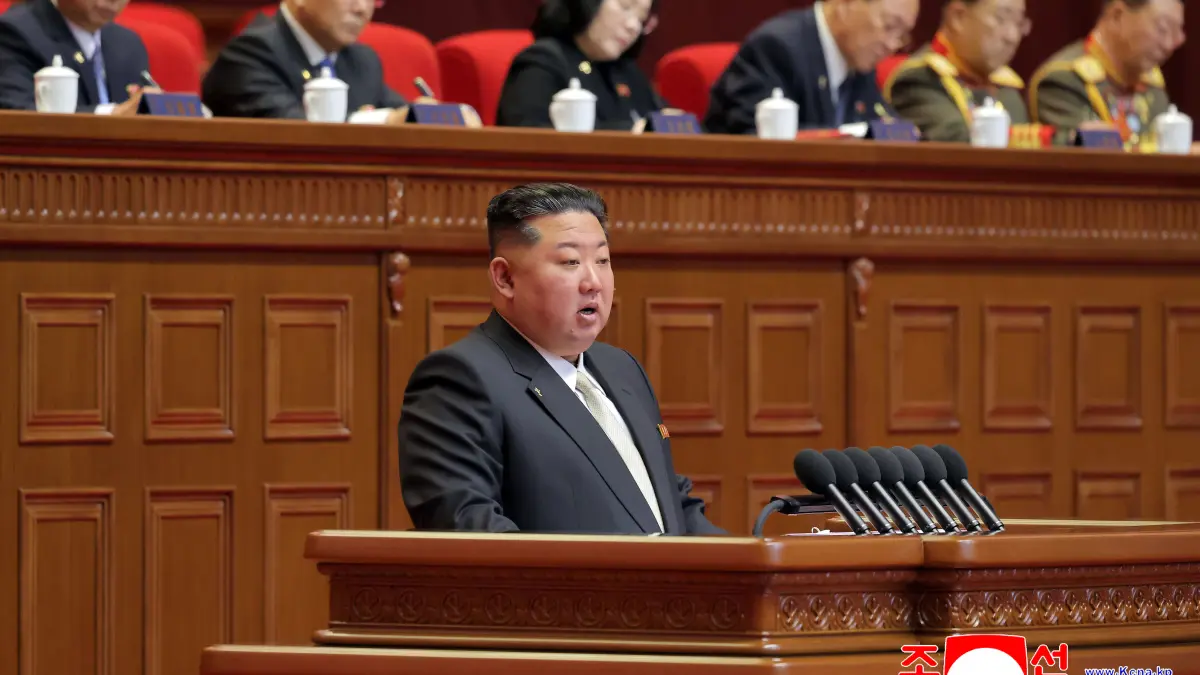
Party Congress To Tighten Grip In North Korea
North Korea 's ninth Party Congress started on February 20, 2026, amid escalating repression of young people, strict control of information, and widespread forced labor, Human Rights Watch said today.
The Congress of the Workers' Party of Korea is the country's most important political meeting. Party Congresses have historically occurred irregularly: the last three were in 1980, 2016, and 2021. Past Party Congresses have set ideological direction, reset policy, and consolidated political power. North Korea has no competitive political parties, and the Workers' Party of Korea controls all state institutions.
"North Korea's leadership claims the Party Congress will shape the country's future, but this is most likely a message of fear, coercion, and deprivation," said Lina Yoon, senior Korea researcher at Human Rights Watch. "The government should address economic hardship, lack of opportunity, and barriers to health care, instead of silencing youth and extracting labor through coercion."
Since the last Party Congress, in 2021, the government has increased repression, with ideological and information controls focusing on young people. The authorities have also tightened market restrictions that deepened economic inequality between rural and Pyongyang residents, continued the widespread use of unpaid forced labor, and deployed about 11,000 soldiers to Russia for combat under abusive conditions.
Official statements support the tighter control over youth. In January, North Korean leader Kim Jong Un praised young people who subordinated their "precious dreams" to state demands, including their involuntary deployment to "difficult and labor-consuming" overseas worksites and military operations, a reference to the war in Ukraine. He framed obedience and sacrifice as core civic virtues, while condemning the "moral depravity" of young people abroad.
Since 2021, the government has aggressively enforced legislation that criminalizes access to foreign information and cultural expression, including the Reactionary Ideology and Culture Rejection Law, the Youth Education Guarantee Law, and the Pyongyang Cultural Language Protection Law. These laws ban watching or sharing foreign media, using South Korean expressions or accents, and "non-socialist" styles of singing, dressing, or getting married, with punishments ranging from forced labor to long prison sentences or including execution.
People who have fled the country have reported a sharp escalation in punishments for information-related offenses, particularly affecting young people. Kim Il-hyuk, a rice trader from South Hwanghae province who left North Korea in 2023, told Human Rights Watch that "[relatively] tech-savvy young people were especially targeted for surveillance" in his hometown. He described witnessing the public execution of a 22-year-old man in 2022 for listening to South Korean songs and sharing foreign media.
Foreign-based media
https://www.hrw.org/news/2026/02/20/north-korea-party-congress-set-to-bolster-repression
View Original | AusPol.co Disclaimer